
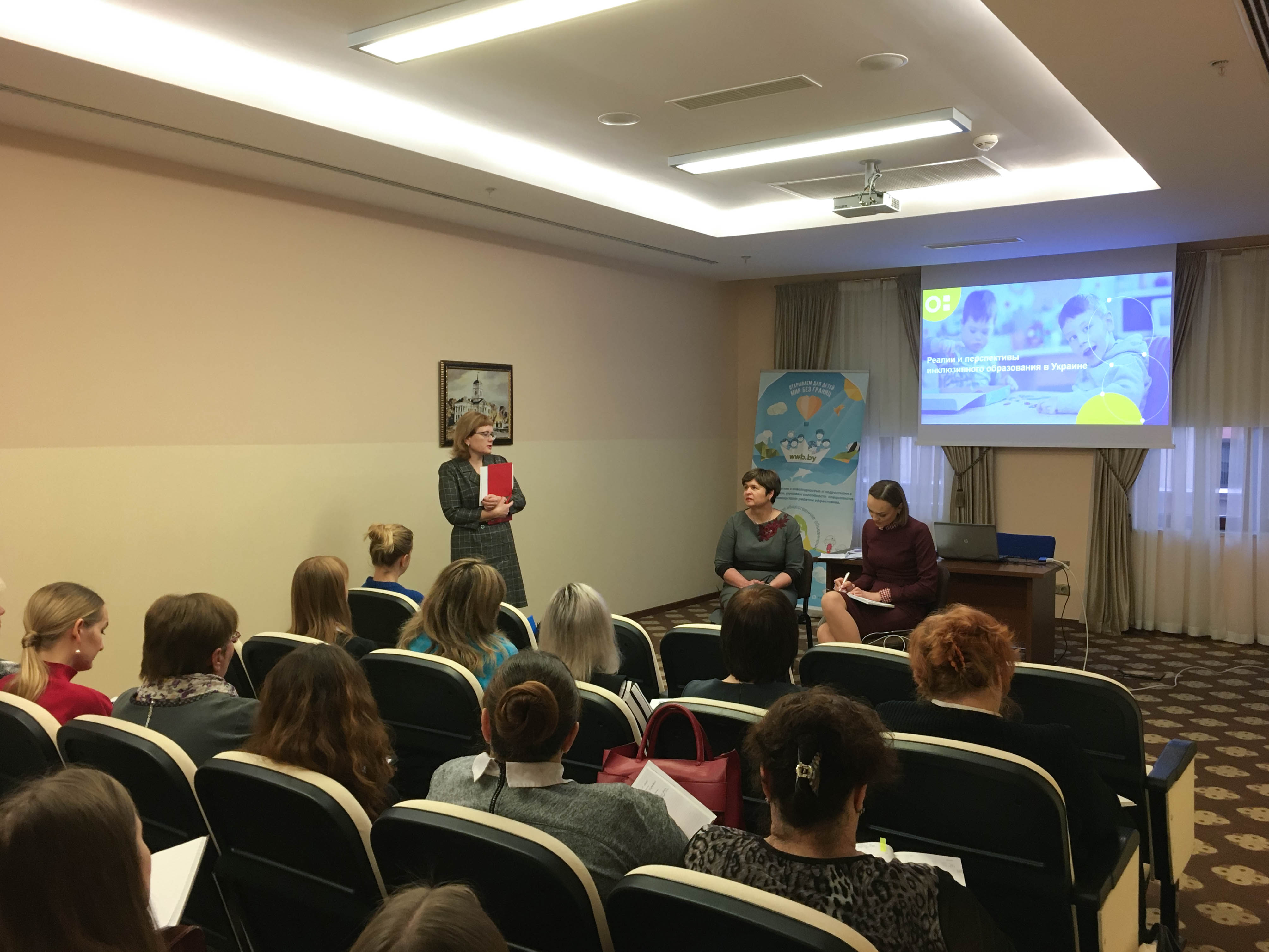


In Georgia, deinstitutionalization began in 1998 with pilot, trial and individual programs, international and local initiatives of public organizations. This was told by two experts: Esma Humberidze (youth representative of Georgia in the UN), Iya Tsilikishvili (organization "Together for real changes"). The state reform of guardianship and guardianship of children began in 2005, in which deinstitutionalization of children with disabilities was one of the priority topics, as now in Belarus in the framework of the project “Step towards".
To prevent children with disabilities from entering boarding schools in Georgia, various studies were conducted: first, they identified the reasons why biological families abandon children, then they began to develop services for families raising children with disabilities. Were developing day centers for children with disabilities, were creating programs for intervention in early child development and rehabilitation-habilitation of children; were opening foster centers/shelters for mother and child; separately started to work a home care program for children with deep mental retardation and reformed monetary social assistance. First of all, the development of different types of support for families and the availability of various services was considered.
Every child should grow up and form in the family – this is the main goal of deinstitutionalization, the study focused on not separating the child from the family and reintegrating into the native family, transferring children from mass institutions to alternative forms of guardianship and family structure, including adoption both in the country and internationally.
In addition, Georgia is moving to the bio-psycho-social model of assigning the status of legal capacity of a person with a disability, which opens up opportunities for more successful adaptation in society. The bio-psycho-social model takes into account the medical condition of a person, while at the same time focusing on his/her actual ability to function in society, on his/her skills and the difficulties that he/she individually faces due to his/her social status due to the state of health. This allows us to solve issues related to the formation of not only an inclusive space, but also an inclusive society in which the other person is perceived from the point of view of his capabilities.
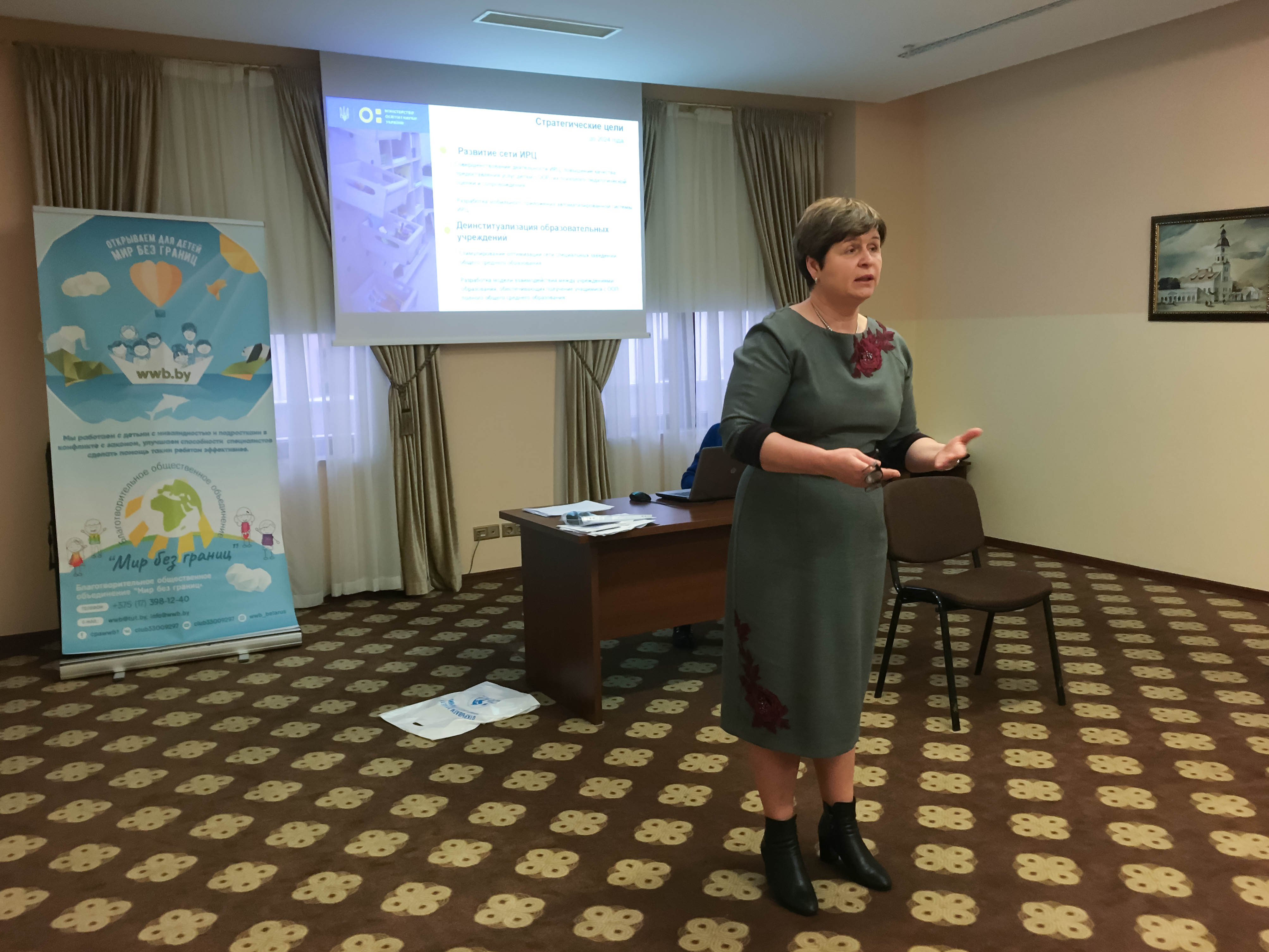
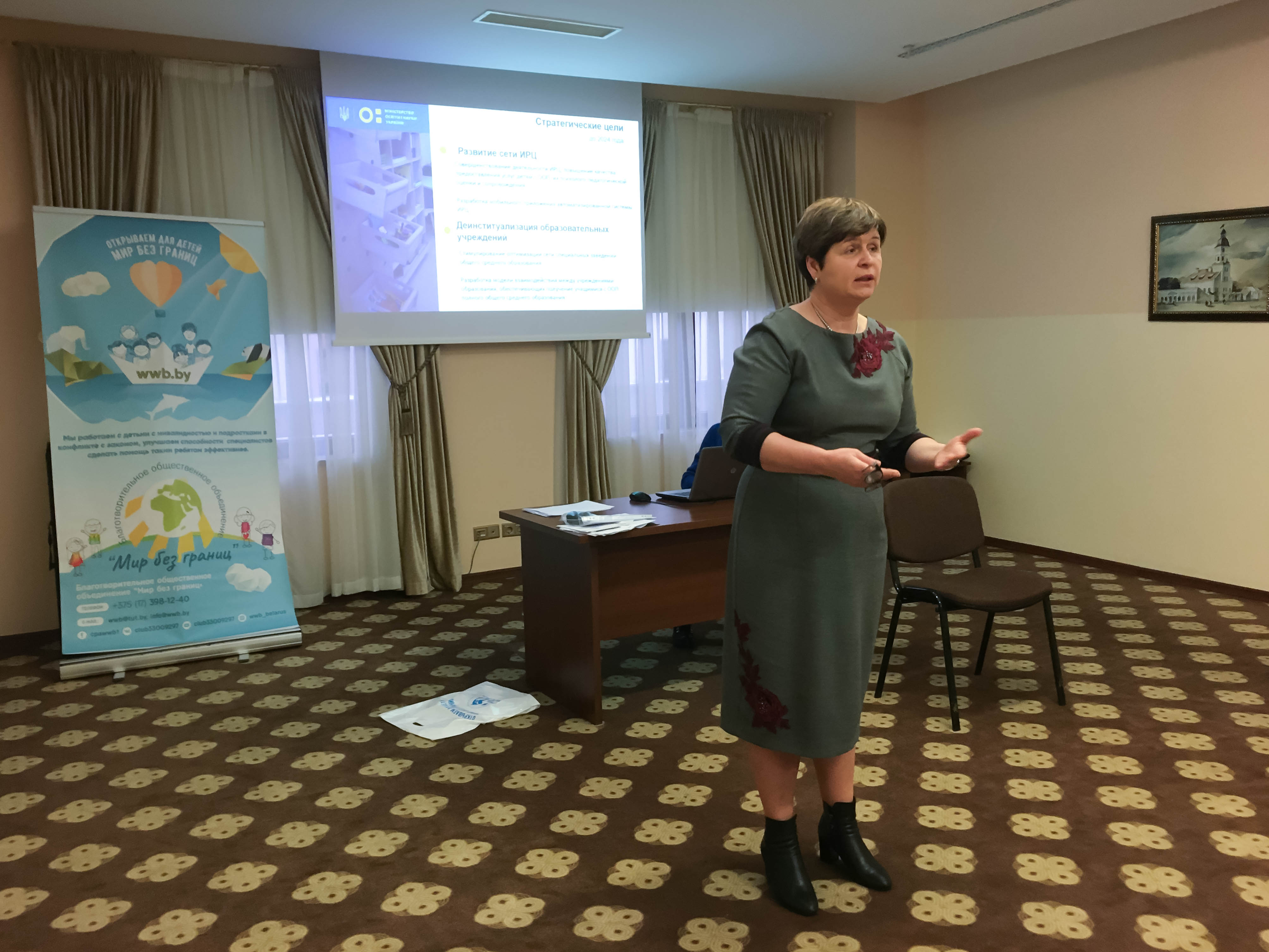
Ukraine is interesting for its reform in the education system. This was told by Larisa Samsonova (head of the expert group of the Directorate of inclusive and extracurricular education of the Ministry of education and science of Ukraine) and Anna Davydenko (doctor of pedagogical Sciences, Professor, Director of the Vinnytsia Institute of The University "Ukraine").
Together, on the basis of the new law on education in Ukraine, they strive to make education "for all", individualized and flexible.
Work done and prospects: during 2018 - 2019, a network of 603 inclusive resource centers was created, a 20% surcharge was introduced for teachers in inclusive classes, extended-day groups became inclusive, a teacher's assistant rate was introduced in each class where children with special educational needs study, resource rooms were created for the state and local budgets in General secondary education institutions.
Over four years, the number of inclusive classes in schools increased by 4.6 times, schools with inclusive classes increased by 3.6 times, the number of children on inclusion in kindergardens increased by 2 times, 838 students in vocational education and 722 students in higher education on inclusion. For 2 years, the number of students with special educational needs has increased by 18 thousand. This is just the beginning. There are also problems that need to be overcome – putting the interests of the child at the center of deinstitualization; to overcome the low awareness of parents of children with special educational needs about the possibility of their children receiving support in the educational process; to consolidate efforts at all levels of all decision-makers - both at the level of the state and at the level of society.
Also develops higher school for young people with disabilities, in this helps the existing system of stimulation to create jobs for people with disabilities, a quota of 7 percent creates a demand and motivation to learn and work in the future.
During the seminar, representatives of the education system and the social sphere could get acquainted with the most advanced ideas and practices of deinstitutionalization. In our country, these changes are also taking place at different rates and using different approaches.
We are not standing in place!
Gallery
29 November 2019
Share: