
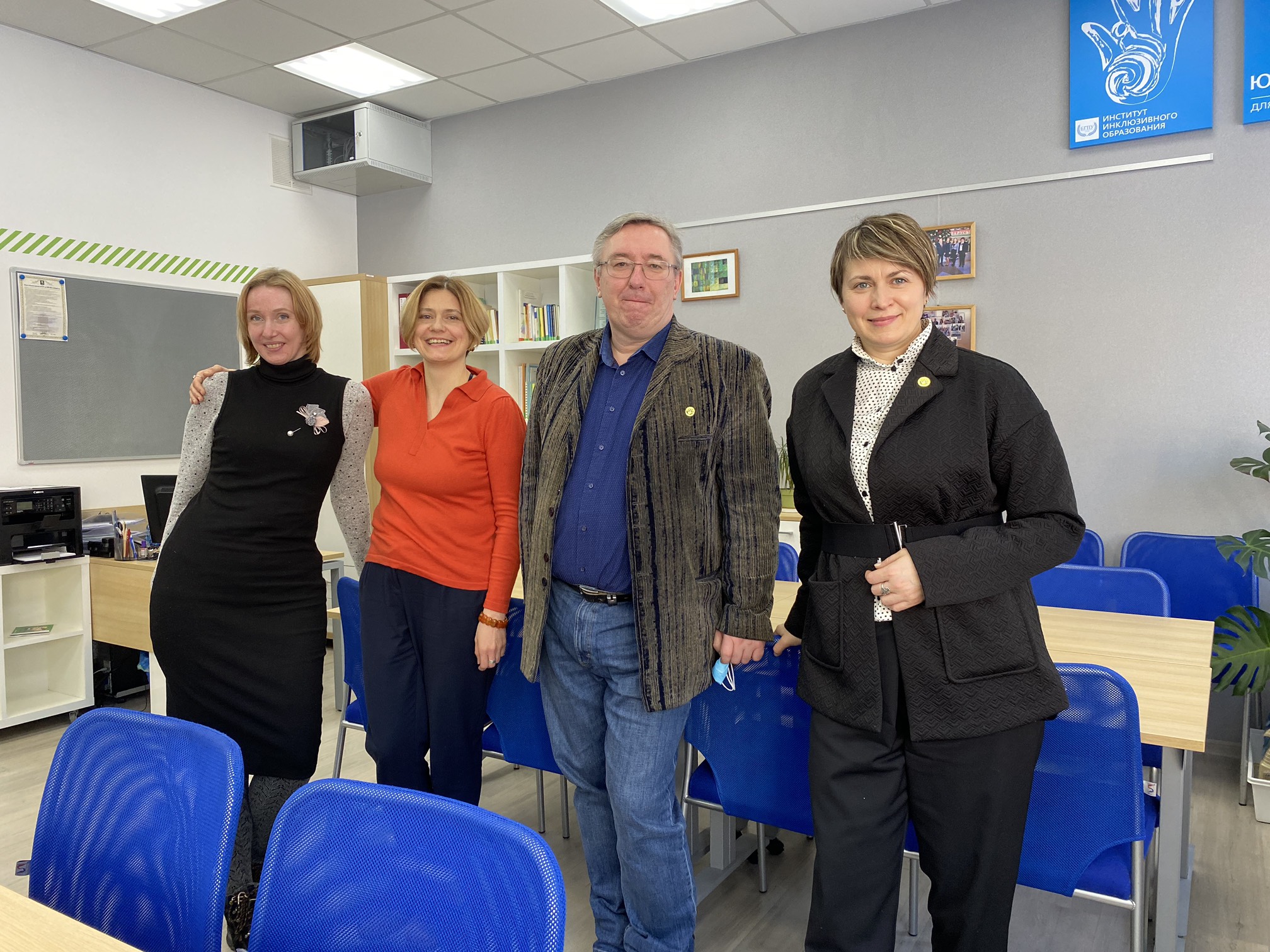
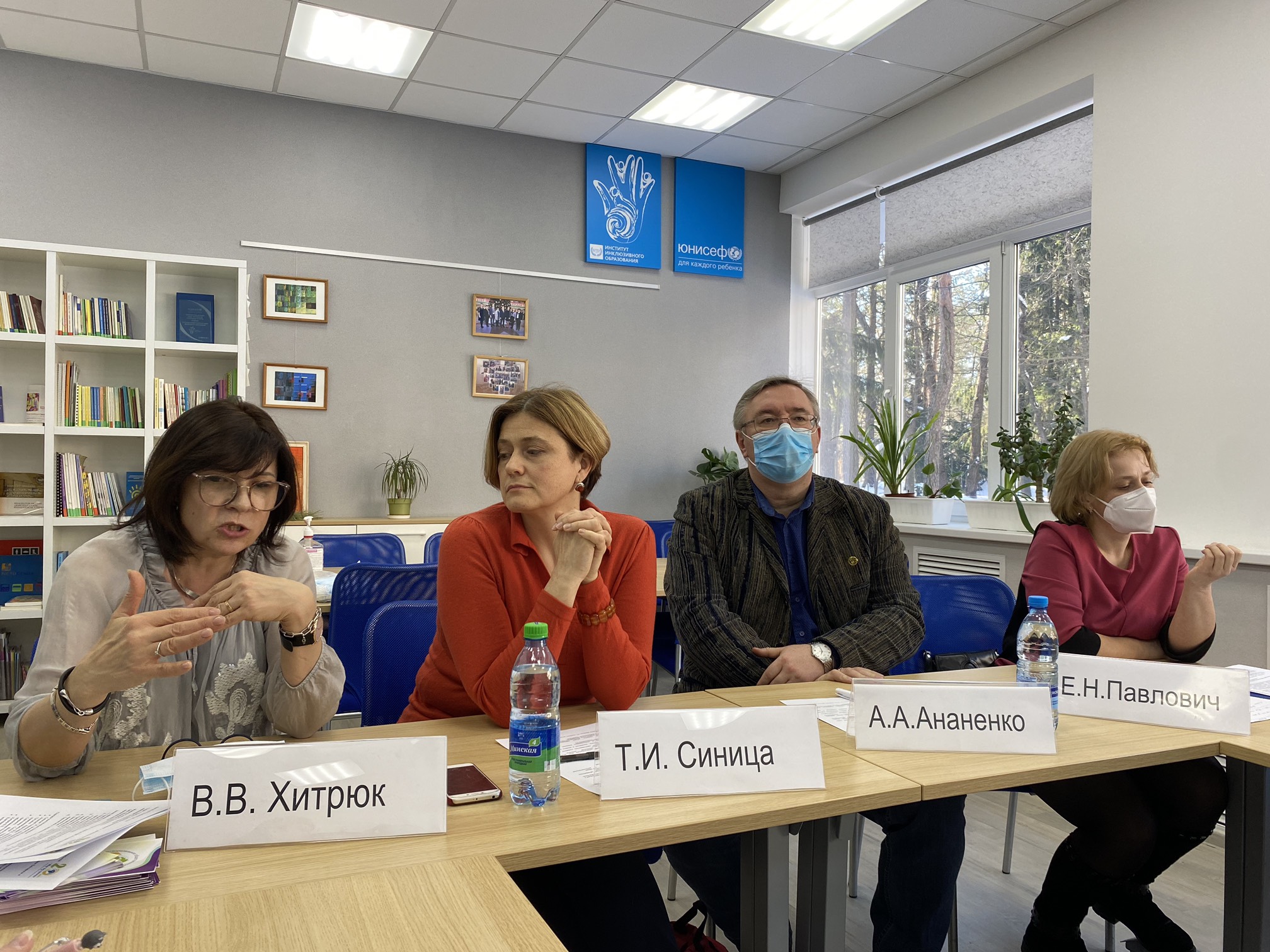
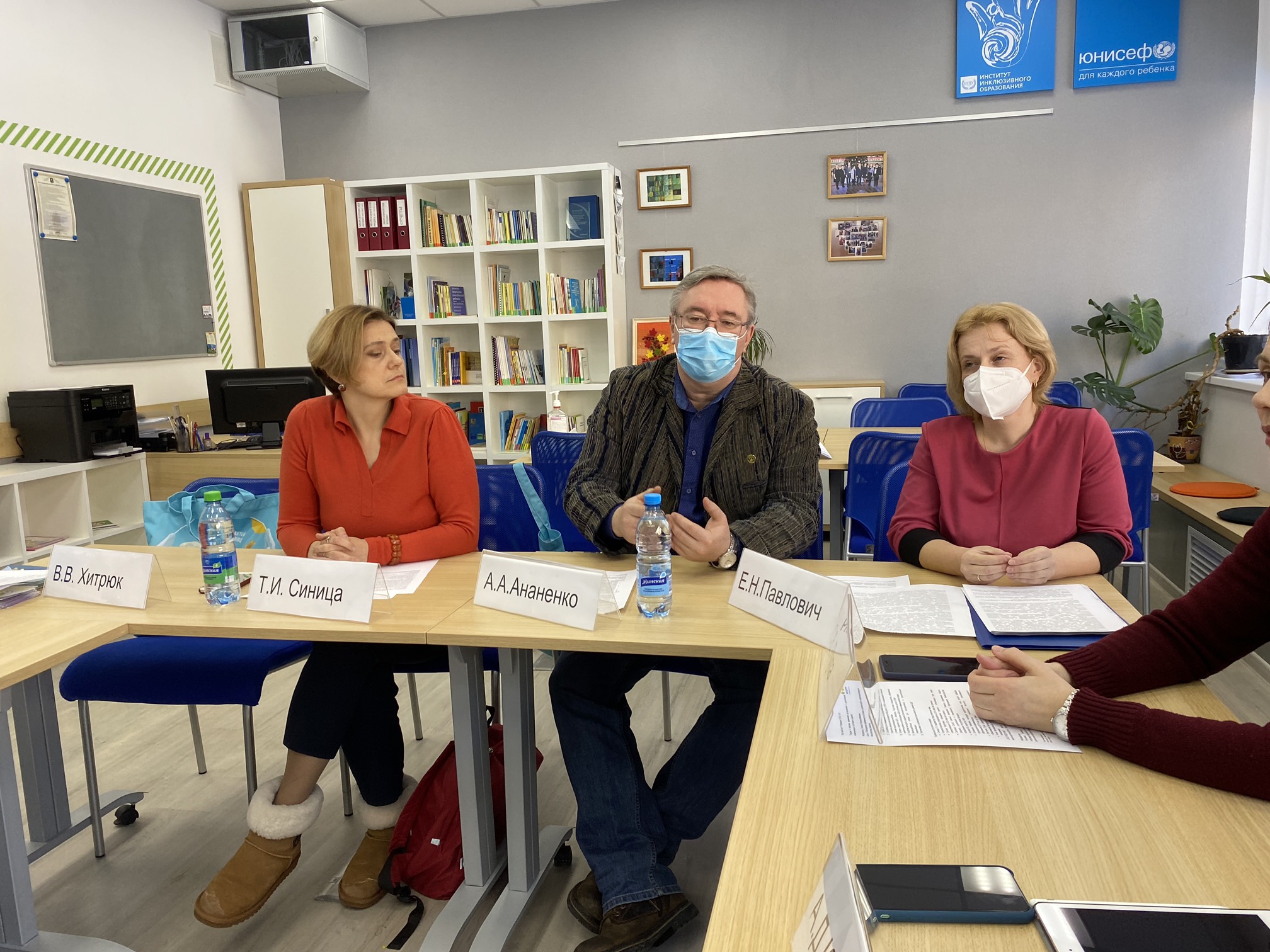
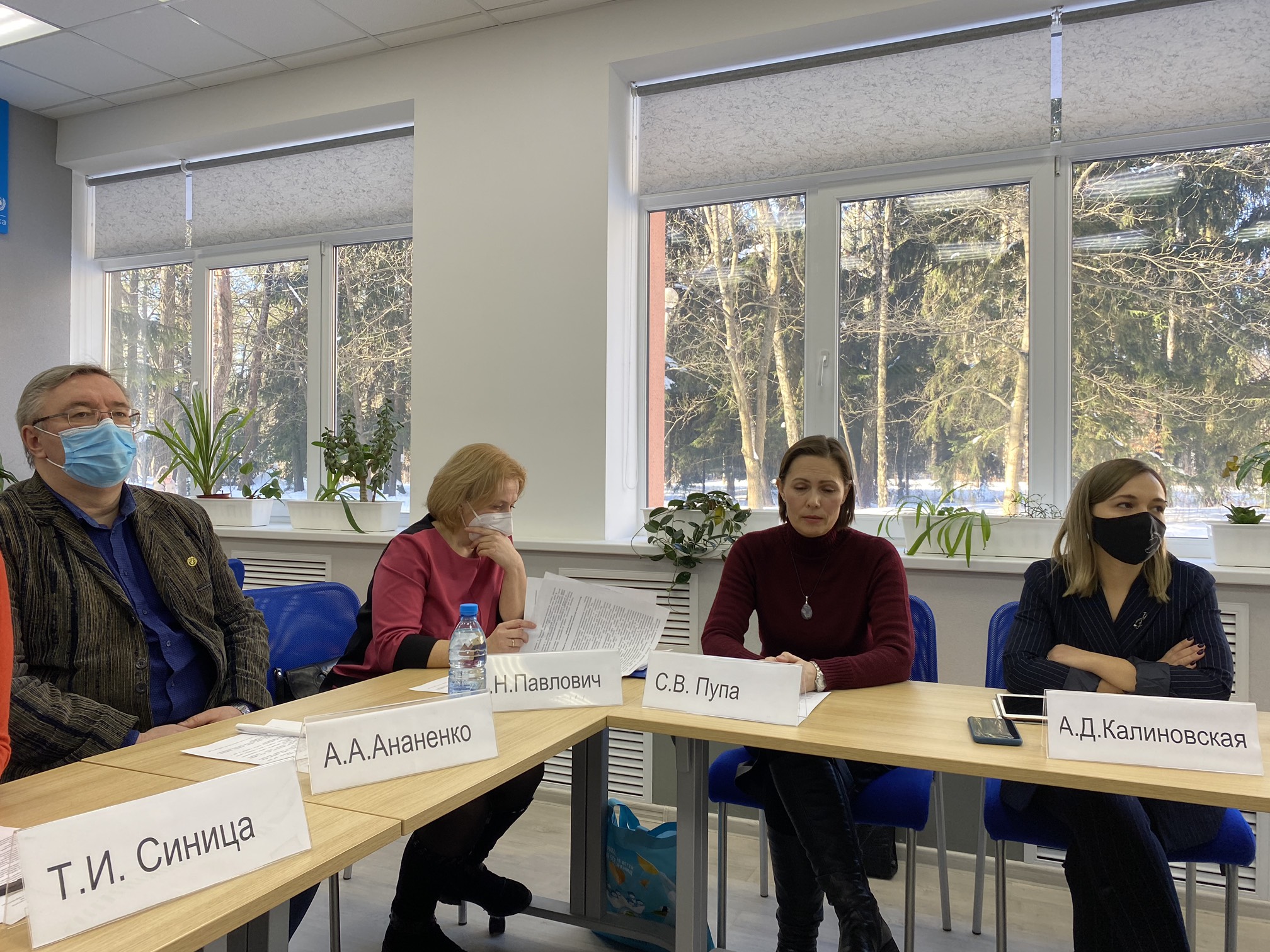


A round table was held on the topic "Theories and practices of using alternative and additional communication: status and perspectives."
This round table was organized within the framework of the project "Realization of Rights Through Communication" aimed at expanding the possibilities of deinstitutionalization of a child with a disability in the residential social institutions of inpatient services through the creation of a system of widespread use of alternative and additional communication (AAC) for non-verbal children or for those with communication difficulties.
Activities to expand the scope of application are carried out by a group of experts consisting of leading specialists from the Institute of Inclusive Education of the Belorussian State Pedagogical University named by M. Tank, Belorussian State University, Academy of Postgraduate Education. Experts prepared analytical materials for specialists, created a program of an introductory course on AAC for employees of a house-boarding institution, conducted 10 online sessions, including an international master class on AAC with the participation of Swedish experts, developed master classes on the use of various types and techniques of AAC, prepared and collected methodological and informational materials on this issue.
At the round table, issues related to the creation of conditions for the realization of the right of a child in the house-boarding institutions to be heard were raised; training specialists working with children with disabilities and improving their skills, creating a favorable communication environment, presented the main problems / barriers for the introduction and use of AAC and ways, opportunities to overcome them.
We share the main quotes of the participants:
Alexei Ananenko: "World without Borders" works with children with severe multiple disabilities in the house-boarding institutions of the social protection system. The topic of communication is very relevant, because it is fundamental for the realization of the rights of children with disabilities: the right to non-discrimination, the right to be heard, the right to the enjoyment of the best interests, the right to quality education. Therefore, in the new project, we focused on creating conditions and opportunities to hear the voice of children, their needs and interests”.
Elena Mulitsa: Ministry of Education pays a great attention to the topic of alternative communication. Last year, the work of an interdepartmental group, which studied the application of AAC in Centres for correctional and developmental education and rehabilitation and territorial social service Centers. To date, the country has developed a system for using AAC, for example, a system of gestures for communicating with children with сhildren with severe and multiple developmental disabilities. One of the important factors influencing the quality of teaching, introduction and use of AAC is motivating specialists.
Tatsiana Korotkevich: The project “Realization of rights through communication” is aimed at promoting deinstitutionalization, transferring children from the house-boarding institutions to families and preventing the institutionalization of disabled children. Improving communication will help parents to be effective, promote inclusion in education and ensure a high level of awareness of children's rights and opportunities for their implementation. How to make the communicative environment in such a way that all its components and participants help to hear the voice of non-speaking children? That is why, together with a group of experts, we analyzed the main barriers to the use of AAC and ways to overcome them, which we will be presented in the discussion.
Tatsiana Sinitsa: “The need to organize a round table on such a topical issue is long overdue. Of course, Belarus is a country that has long known about AAC, education in this matter is carried out - training students, advanced training of specialists working with children with disabilities ... BUT, in fact, the implementation of AAC in practice is still far from good and even satisfactory. How many stories do we know of non-speaking children and adults with disabilities who use AAC quite freely in their lives, can communicate with different people and are included in society with AAC? The fact of the matter is that this is not observed. And here we need to understand what is the reason and how we can improve the situation with the development of AAC in Belarus. Moreover, the issue of inclusion of children and adults with disabilities is becoming more and more urgent. It is remarkable that the round table is attended by both representatives of Ministry of Education of the Republic of Belarus and state institutions, as well as parents, practitioners of various profiles - teachers, psychologists as well as representatives of non-profit organizations dealing with complex issues of socialization of children with disabilities, including children from the house-boarding institutions.
The roundtable discussion turned out to be rich and informative. Indeed, one can see the dynamics in the understanding of what has been achieved in the AAC topic and what is still worth doing. Thanks to the project "Realization of rights through communication" which is implemented by "World without Borders", it is possible to develop areas of practice-oriented training on the basis of a house-boarding institution with the involvement of specialists and the provision of supervision. For me, as a psychologist, it remains important to understand the need to create a wide platform for testing various means of communication and practicing alternative communication skills for non-speaking children and adults with disabilities.